Executive Summary
- PV and battery projects are often delayed not by one major engineering error but by a cluster of unresolved technical interfaces between multiple suppliers and control layers.
- The decisive interfaces typically sit between PV plant, inverter/PCS, battery system, EMS/PPC, MV station, SCADA, metering and grid operator requirements.
- If setpoint ownership, protection boundaries, communication mapping, operating modes and performance guarantees are not defined early, the project enters commissioning with conflicting assumptions.
- Successful integration requires interface management as a formal engineering workstream — not as a late-stage coordination activity.
Key Figures
Primary Interfaces9
Control LayersPlant Controller · EMS · OEM Controllers
Core Operating ModesCharge · Discharge · Curtailment · Reactive Control
Commissioning Risk AreasSetpoints · Communications · Protection · Performance Tests
Technical Figure
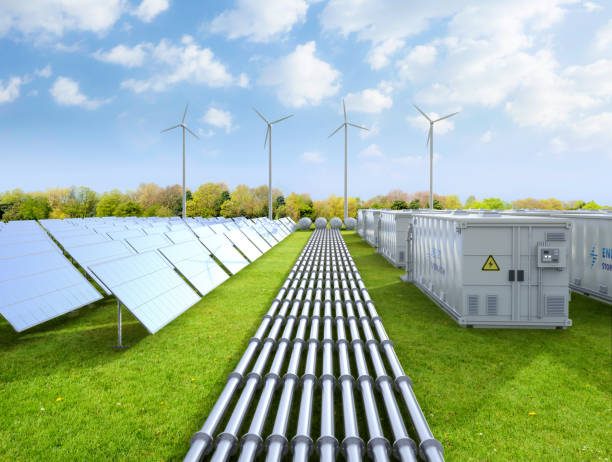 Figure 1. Hybrid PV + BESS applications depend on clean electrical and control interfaces between plant equipment, energy-management functions and grid-connection systems.
Technical Discussion
Why interfaces dominate risk
In hybrid projects, each subsystem may individually comply with its own specification while the total plant still underperforms because inter-system responsibilities are unclear. This gap appears most often in active/reactive control, curtailment logic, availability measurement and alarm handling.
Critical interface map
The minimum interface map should cover electrical boundaries, ownership of transformers and auxiliaries, signal lists, communication protocols, time synchronization, setpoint hierarchies, trip philosophy, black-start or restart logic where relevant, and test responsibilities during commissioning.
Data and control architecture
A reliable architecture defines which controller is master for active power, reactive power, state-of-charge management, grid support and fallback modes. It must also clarify what happens during communication loss, OEM isolation or grid events.
Implementation implication
Early interface definition improves procurement, enables better supplier comparison, reduces change orders and shortens commissioning because test procedures can be planned against stable responsibilities.
Figure Captions
References / Standards
IEC 62933 series — Electrical energy storage systems
IEC 62619 — Secondary cells and batteries containing alkaline or other non-acid electrolytes
IEC 62477-1 — Safety requirements for power electronic converter systems
IEC 61850 / IEC 60870-5-104 — Power-system communication architecture
IEC 61000 series — Electromagnetic compatibility
VDE-AR-N 4110 / 4120 and relevant utility-specific grid-code requirements
Note: Project-specific utility, client and local regulatory requirements must always be added to the standards baseline.
Recommended iGRANEX Packages
iGRAEnergy ReadinessBuilds the technical baseline and clarifies operating philosophy for hybrid PV and storage projects.
iGRASupply ExcellenceDefines OEM package boundaries, interface schedules and technical evaluation criteria for procurement.
iGRAProject ControlSupports supplier coordination, interface management and commissioning alignment across the project lifecycle.
The page is optimized for print and Save-as-PDF output for a whitepaper-style technical brief.