Technical Discussion
1. Efficiency and controllability
Modern converter systems reduce conversion losses, enable variable-speed operation, optimize operating points and support bidirectional power flows. Their value is not limited to component efficiency: they allow entire systems to follow demand, generation availability and grid constraints dynamically.
2. Complexity and system interaction
Converter-dominated infrastructure behaves differently from conventional electromechanical systems. Fast control loops, PLL behaviour, weak-grid conditions, filter resonances, multiple vendors and proprietary control functions can create interactions that are not visible in isolated equipment tests.
3. Power quality and grid stability
Power electronics can actively improve voltage support, reactive power control, flicker behaviour and frequency response. At the same time, switching harmonics, interharmonics, resonance amplification and rapid set-point changes require coordinated studies, measurement concepts and filter design.
4. Electrical grids and HVDC
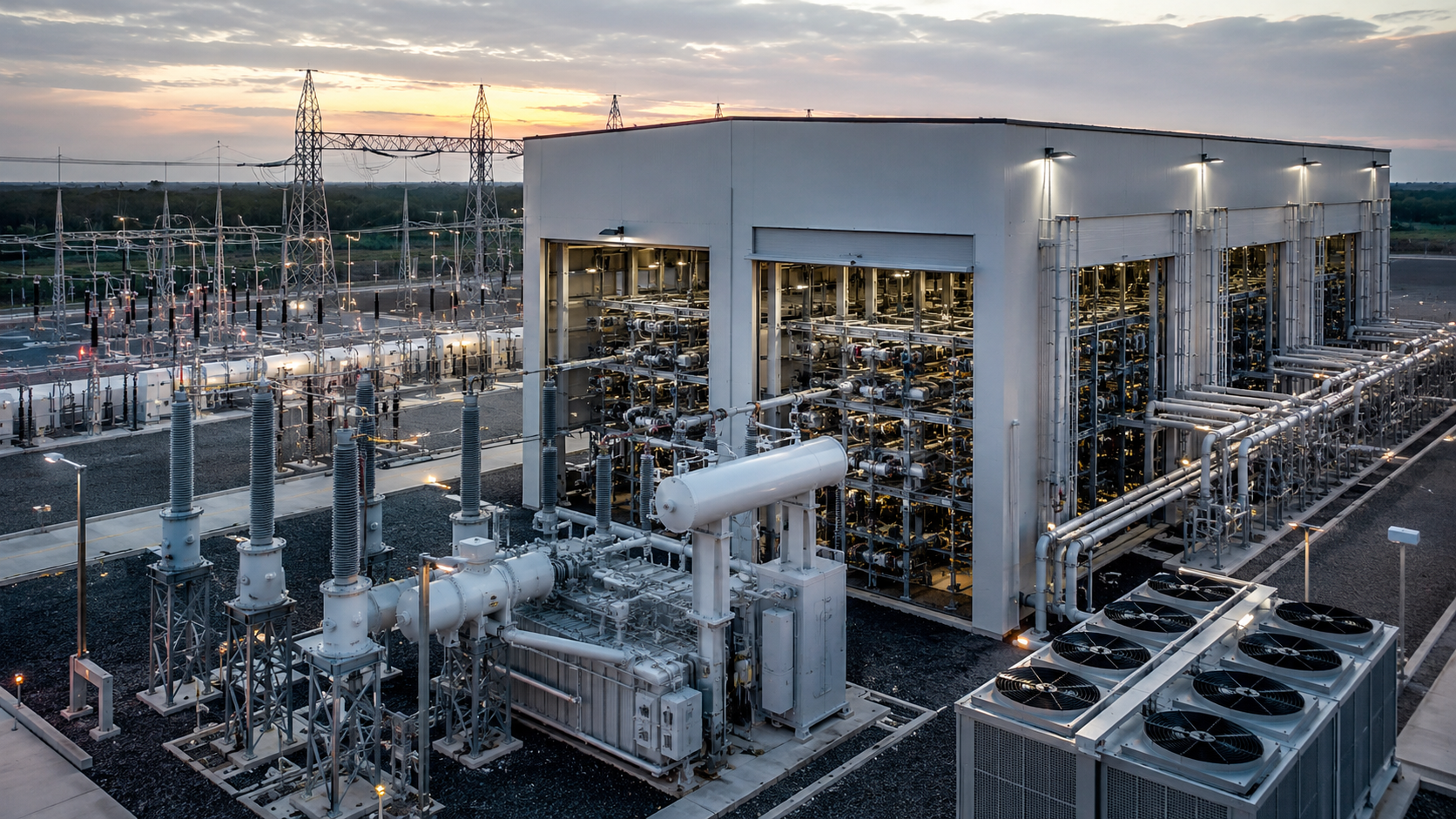
FACTS, STATCOM, grid-forming converters and HVDC stations extend the controllability of transmission and distribution systems. They enable long-distance power transfer, asynchronous system coupling, offshore integration and dynamic voltage support, but require detailed coordination of protection, controls and grid-code performance.
5. Hydrogen and electrolysis
Large electrolysers are converter-fed, highly controllable industrial loads. Their power electronics determine ramp rates, efficiency, reactive power behaviour and grid impact. Connection concepts must therefore consider harmonics, transformer loading, voltage fluctuations, redundancy and interaction with local renewable generation.
6. Data centres and critical power
UPS systems, rectifiers, inverters and static transfer switches form the electrical backbone of high-availability data centres. Efficiency gains must be balanced against fault tolerance, bypass design, selectivity, short-circuit contribution, harmonics and the behaviour of parallel converter systems.
7. BESS and renewable integration
Battery PCS and renewable inverters are key interfaces between DC sources and AC networks. They support active and reactive power control, frequency services, voltage regulation, black start and grid-forming operation. Their effectiveness depends on coordinated EMS, protection, thermal design, communication and grid-study assumptions.